

10:00 AM - 5:00 PM (IST)
Master Class on Tantrayukti by Dr. M. Jayaraman
Faculty
INDICA & CENTRAL SANSKRIT UNIVERSITY
Present
MASTER CLASS ON TANTRAYUKTI
A Two Day Workshop on IKS-based Thesis Construction
Following the depth and intensity of the recent Master Class on the Mahābhārata with Prof Vishwa Adluri, INDICA, in collaboration with Central Sanskrit University, announces a two day Master Class on Tantrayukti with Prof M. Jayaraman.
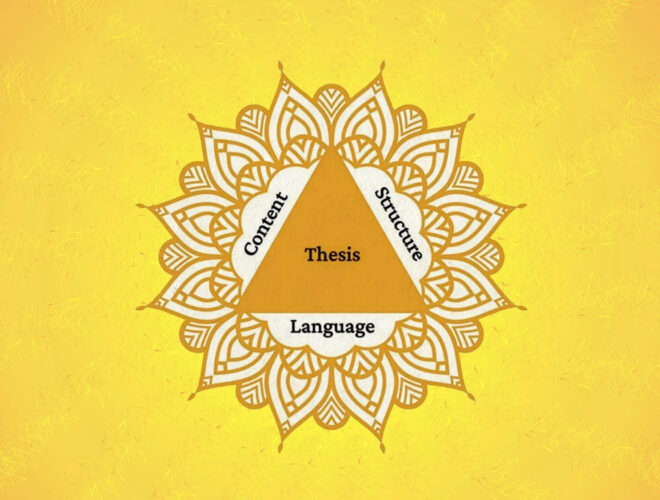
Tantrayukti is the classical Indian discipline of textual construction and method. It teaches us how a śāstra thinks, how an inquiry is framed, how an argument unfolds, and how a work holds together as a coherent whole. It is, in essence, an indigenous methodology for building a thesis.
For anyone engaged in serious research or long-form writing today, the absence of method is deeply felt. We often carry rich material but struggle with structure. We write, but our arguments wander. We research, but our work lacks inner architecture. Whether one works within Indian Knowledge Systems or in any other field, the challenge is the same: how to think clearly, build coherently, and let a work hold together as a whole.This Master Class is designed to address that gap by introducing participants to an Indic framework for thinking, sequencing, and exposition, and by showing how it can be applied within modern academic writing.
This offering forms part of the ongoing academic collaboration between INDICA and Central Sanskrit University, and is conceived as a foundational training for those engaged in serious research and writing within Indian Knowledge Systems.
Participation is through application and selection. A focused cohort of participants will be curated to ensure depth, rigor, and meaningful engagement. Applications are now open. Interested participants are invited to apply through the registration form on this page. All applications will be reviewed, and selected participants will be informed after the evaluation process.
Mandatory Text
All selected participants are required to procure a copy of Tantrayukti: IKS-based Handbook for Thesis Construction by Prof M. Jayaraman. The Master Class will be anchored in this text, and participants are expected to bring their copy to the sessions.
Gratitude-Based Participation
At INDICA, learning is anchored in gratitude, not transaction. This Master Class is offered in reverence to the knowledge we have inherited and to those who choose to engage with it sincerely. We follow a Gratitude Model of participation, which invites engagement rooted in intention, not obligation.
There is no fixed upfront fee for participation. Each program, however, involves significant intellectual, organisational, and financial commitment. The approximate cost per participant for this two-day Master Class is ₹3500.
Participants are invited to offer Guru Dakṣiṇā in a manner that reflects the value they derive and their appreciation for the space being created. These contributions sustain our ability to continue offering such programs and support the larger mission of preserving and transmitting Indian Knowledge Systems. To express your gratitude monetarily, please click here.
Gratitude may also be expressed through action. Carrying forward what is received through writing, mentoring, dialogue, or other forms of service is equally valued.
Travel & Stay
Participants are requested to make their own travel and accommodation arrangements. INDICA does not provide or coordinate these. During the Master Class, tea will be served twice daily and lunch will be provided on both days.
Certificate of Participation
A Certificate of Participation will be awarded to participants who complete the Master Class in its entirety.
This includes attending all sessions across both days in full and on time, and fulfilling all completion requirements of the program, including submission of feedback and any additional components such as a reflective essay or other assigned work, where applicable.
Schedule
DAY 01
Session 1 | 10:00 – 11:15
- Intellectual Climate of Ancient Bharat
- Hints for Organized Knowledge Transmission from across Śāstra tradition
- Tantrayukti as a unified and compact document for Knowledge Transmission
Tea Break | 11:15 – 11:30
Session 2 | 11:30 – 1:00
- Historical evolution and academic functions of Tantrayukti
- Pan-Indian, translingual, and multidisciplinary usage
- Contribution of Tantrayuktis for Content – Structure and Language
- Content Development: Foundational Tantrayuktis – Conceptual grounding and problem formulation
- Saṁśaya, Apadeśa, Anumata, Hetvārtha
Lunch | 1:00 – 2:00
Session 3 | 2:00 – 3:15
- Tantrayuktis for Thesis Content Development
- Originality & Analytical Expansion
- Devices for interpretation, synthesis, and innovation
- Ekānta, Niyoga, Upadeśa, Apavarga, Vikalpa, Samuccaya, Ūhya
Tea Break | 3:15 – 3:30
Session 4 | 3:30 – 5:00
- Reflective period for thinking about the Yuktis for content from existing works of thesis or books pertaining to participants’ own area of research – 45 mins (individually/in group/in pairs)
- Sharing of reflections by participants – 45 mins
DAY 02
Session 5 | 10:00 – 11:15
- Structuring a Thesis
- Organizing chapters and arguments
- Adhikaraṇa–Vidhāna, Uddeśa–Nirdeśa, Pūrvapakṣa–Uttarapakṣa
- Continuity, extension, and evaluation: Atikrāntavekṣaṇa–Anāgatavekṣaṇa, Atideśa–Pradeśa, Prasaṅga–Viparyaya
Tea Break | 11:15 – 11:30
Session 6 | 11:30 – 1:00
- Reflective period for thinking about the Yuktis for content from existing works of thesis or books pertaining to participants’ own area of research – 45 mins (individually/in group/in pairs)
- Sharing of reflections by participants – 45 mins
Lunch | 1:00 – 2:00
Session 7 | 2:00 – 3:15
- Language Refinement – Part I
- Clarification, conceptual expansion, and advanced interpretative devices
- Yoga, Padārtha, Nidarśana, Upamāna, Vyākhyā, Nirvacana, Vākyaśeṣa, Arthāpatti, Svasaṁjñā
- Tantra Guṇas and Tantra Doṣas – Excellences and Flaws in text construction
Tantrayukti in Contemporary Academia
- Scholar checklists and evaluator toolkits
- Formal academic integration and discussion
Tea Break | 3:15 – 3:30
Session 8 | 3:30 – 5:00
- Reflective period for thinking about the Yuktis for content from existing works of thesis or books pertaining to participants’ own area of research – 45 mins (individually/in group/in pairs)
- Sharing of reflections by participants – 45 mins
Faculty
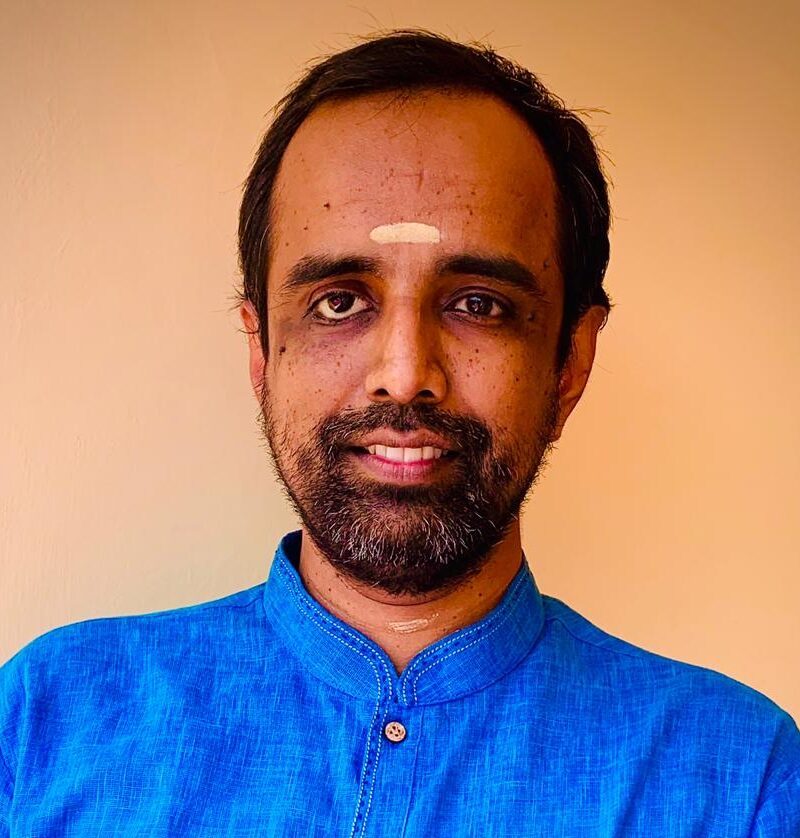
Dr. M. Jayaraman
Dr. M. Jayaraman is Professor and Dean at S-VYASA University, Bengaluru, and a renowned authority on Tantrayukti, the classical Indian methodology of thesis construction. Trained in both traditional Gurukula and modern academics, he holds a PhD in Sanskrit and has authored over 25 books and 21 research articles on Sanskrit, Yoga, and Indian Knowledge Systems. A much sought after speaker and mentor, Dr. Jayaraman’s pioneering work bridges ancient textual traditions with contemporary research practices. This Master Class is meant for scholars, researchers, and serious students who are writing, or preparing to write, substantial academic work and wish to ground their inquiry in an indigenous method of construction.