

10:00 AM - 5:00 PM (IST)
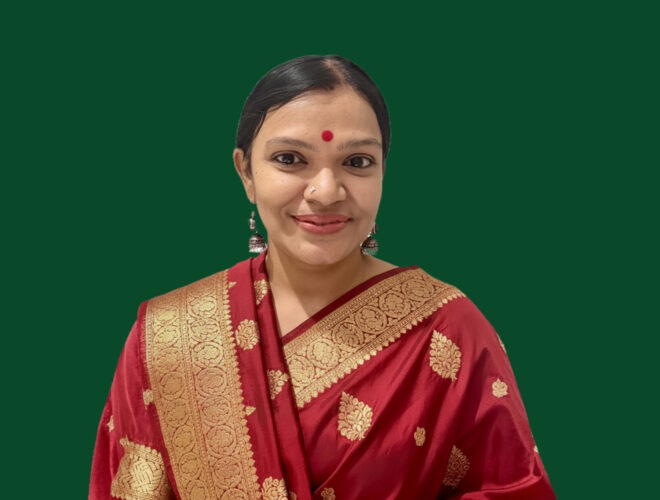
Master Class on Temple Management in the Āgamas by Dr Deepa Duraiswamy
SPEAKERS
Register
Categories:
Location
Auditorium, Vishwa Bharti Public School, Arun Vihar, Sector 28
Noida,
Uttar Pradesh
201301,
India
Contact
INDICA & CENTRAL SANSKRIT UNIVERSITY
Present
MASTER CLASS ON Temple Management in the Āgamas
A Two Day Workshop
INDICA, in collaboration with Central Sanskrit University, announces a two day in person Master Class on Temple Management in the Āgamas with Dr Deepa Duraiswamy.
This offering continues the academic collaboration between INDICA and Central Sanskrit University that has brought together a series of intensive Master Classes exploring different dimensions of Indian Knowledge Systems. Earlier programs in this series examined the Mahābhārata as a civilizational text with Prof Vishwa Adluri, introduced the classical methodology of śāstric reasoning through Tantrayukti with Prof M. Jayaraman, and explored the Indian understanding of the mind through Bhāratīya Mānas Śāstra with Prof Mala Kapadia.
The present Master Class turns toward one of the most visible and enduring institutions of Bhārata’s civilisation: the temple.
Temples in Bhārata have historically functioned as far more than places of worship. They are living institutions where philosophy, ritual practice, architecture, music, economy, and community life converge into a single sacred ecosystem. For centuries, temples served as centres of education, culture, social organization, and spiritual life.
The principles governing this ecosystem are articulated in the Āgamas, the classical textual traditions that guide the establishment of temples, the consecration of deities, the conduct of daily worship, and the long-term governance of temple institutions.
In contemporary discussions, temple management is often framed primarily in terms of administration or regulation. Yet within the Agamic vision, temple governance cannot be separated from metaphysics, sacred architecture, ritual precision, priestly lineages, and community responsibility. The temple is conceived as a carefully structured organism in which philosophy, process, and lived experience are inseparably woven together.
This Master Class introduces participants to the Agamic framework of temple management, exploring how temples were envisioned, established, sustained, and administered within the classical traditions, and how these principles may inform contemporary thinking about temple institutions.
Across two intensive days, participants will examine the philosophical foundations of temple traditions, the processes that animate temple worship, the institutional structures that historically sustained temples, and the challenges faced by temple institutions in the present day.
The program will combine textual engagement with practical discussion, enabling participants to understand how Agamic principles translate into living institutional practice.
Mandatory Text
All selected participants are required to procure a copy of Temple Management in the Āgamas by Dr Deepa Duraiswamy, published by INDICA.
The Master Class will be anchored in this text, and participants are expected to bring their copy to the sessions.
Gratitude-Based Participation
At INDICA, learning is anchored in gratitude, not transaction. This Master Class is offered in reverence to the knowledge we have inherited and to those who choose to engage with it sincerely. We follow a Gratitude Model of participation, which invites engagement rooted in intention, not obligation.
There is no fixed upfront fee for participation. Each program, however, involves significant intellectual, organisational, and financial commitment. The approximate cost per participant for this two-day Master Class is ₹5000.
Participants are invited to offer Guru Dakṣiṇā in a manner that reflects the value they derive and their appreciation for the space being created. These contributions sustain our ability to continue offering such programs and support the larger mission of preserving and transmitting Indian Knowledge Systems. To express your gratitude monetarily, please click here.
Gratitude may also be expressed through action. Carrying forward what is received through writing, mentoring, dialogue, or other forms of service is equally valued.
Travel & Stay
Participants are requested to make their own travel and accommodation arrangements. INDICA does not provide or coordinate these. During the Master Class, tea will be served twice daily and lunch will be provided on both days.
Certificate of Participation
A Certificate of Participation will be awarded to participants who complete the Master Class in its entirety.
This includes attending all sessions across both days in full and on time, and fulfilling all completion requirements of the program, including submission of feedback and any additional components such as a reflective essay or other assigned work, where applicable.
Schedule
DAY 01 | The Temple as Sacred Institution
Session 1 | 10:00 – 11:15
At the Core of Dharma: The Temple Ecosystem and the Āgamas
Understanding the temple as a civilisational institution
The Agamic framework governing temple life
Temple as the intersection of philosophy, ritual, and community
Tea Break | 11:15 – 11:30
Session 2 | 11:30 – 1:00
Driven by Design: The Śaiva Tradition and Siddhānta Philosophy
Metaphysical foundations of temple traditions
The philosophical vision underlying Agamic worship
Sacred architecture and cosmic symbolism
Lunch Break | 1:00 – 2:00
Session 3 | 2:00 – 3:15
Powered by Process: Temple Establishment and Worship
What makes a temple according to the Āgamas
Consecration, installation, and ritual activation
Structures of daily and periodic worship
Tea Break | 3:15 – 3:30
Session 4 | 3:30 – 5:00
Encoded into Experience: The Sthalaparivāra and Temple Networks
Families of the temple and ritual relationships
Sacred geography surrounding the temple
The experiential and social ecology of temple spaces
DAY 02 | Governance, Practice, and Continuity
Session 5 | 10:00 – 11:15
Mind and Matter: Materials and Ritual Infrastructure
Material foundations of temple practice
Sacred materials, ritual implements, and temple infrastructure
Maintaining ritual continuity
Tea Break | 11:15 – 11:30
Session 6 | 11:30 – 1:00
Rāja and Rājña: Temple Administration and the State
Governance structures in temple traditions
Historical relationships between temples and political authority
Custodianship, patronage, and institutional responsibility
Lunch Break | 1:00 – 2:00
Session 7 | 2:00 – 3:15
Current Practice: History and Case Studies
Historical transformations in temple management
Administrative realities in modern temple institutions
Case studies and institutional lessons
Tea Break | 3:15 – 3:30
Session 8 | 3:30 – 5:00
Till the Sun and the Moon Exist: A Framework for the Future
Revisiting Agamic principles for contemporary contexts
Institutional continuity and cultural stewardship
Discussion and reflections
Speakers
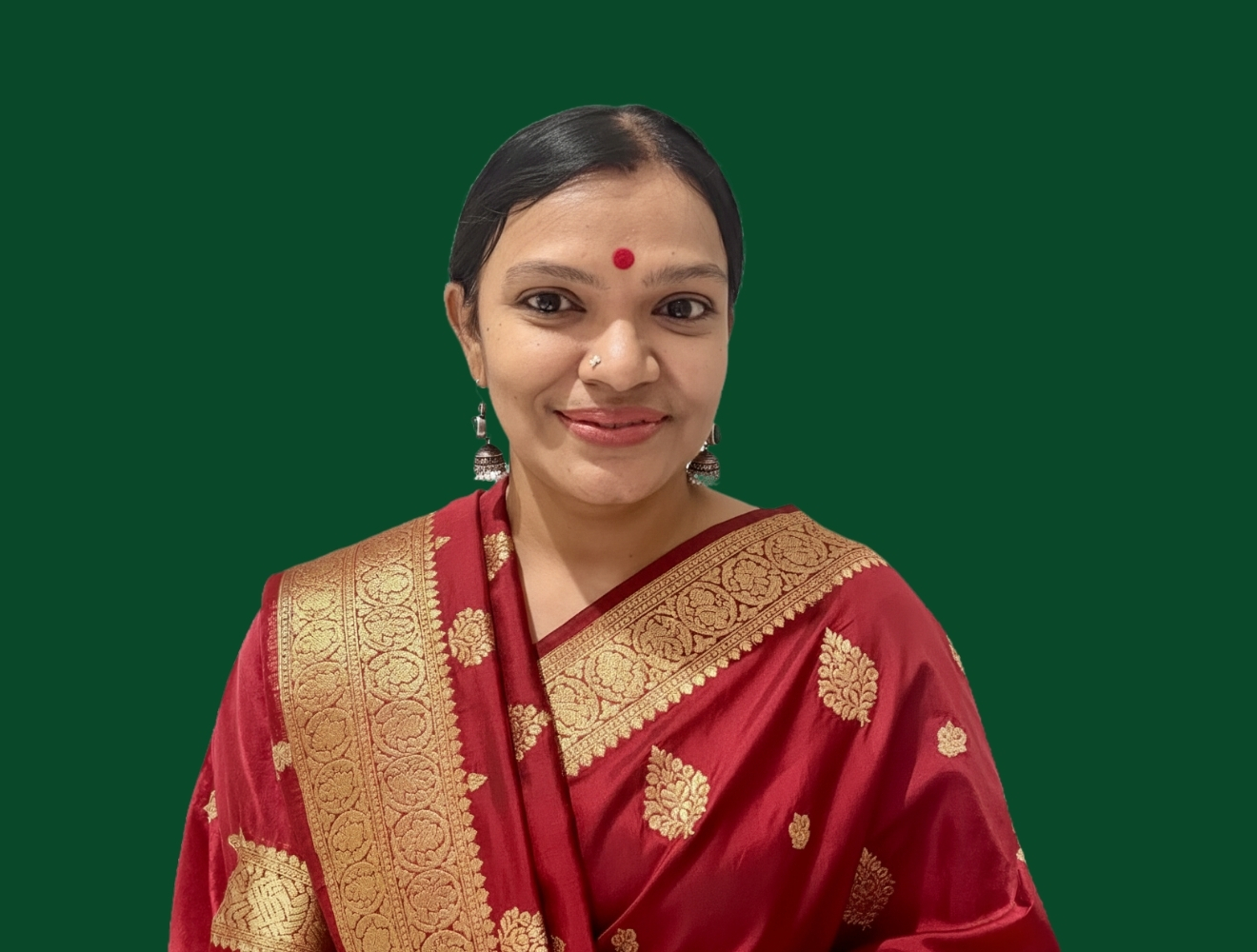
Dr Deepa Duraiswamy
Dr. Deepa Duraiswamy is a student of Indian Knowledge Systems, with a particular focus on temple traditions, Āgamic knowledge, and the cultural history of sacred institutions in Bhārata. She holds degrees in engineering from the University of Pune and management from IIM Calcutta. Her deep interest in understanding the Āgamas and making their insights accessible to contemporary audiences led her to pursue an interdisciplinary Ph.D. at the Department of Sanskrit, University of Madras, that has been published as the book “Temple Management in the Āgamas” by INDICA, exploring the Āgamic foundations of temple administration, institutional continuity, and effective governance. Her work bridges ancient textual traditions with lived practices, examining how ritual precision, sacred architecture, institutional structures, and community responsibility together sustain temples as vibrant civilisational centres. She has presented papers at various national and international conferences. She taught the first ever course on Temple Management in India on the INDICA Courses platform. She has also taught an introductory course on Śaiva Siddhānta at the Department of Saiva Siddhanta, University of Madras. Through her teaching and research, Dr. Duraiswamy seeks to bring the profound wisdom of the Āgamas—central to the living practice of Sanātana Dharma—into meaningful dialogue with modern questions of heritage, stewardship, and institutional life.