Reflect & Reinvent Yourself With Ramayana

2-Day Residential Retreat

Reflect & Reinvent Yourself With Ramayana

Embark on a transformative journey through the timeless wisdom of the Sri Valmiki Ramayana with our Thavaasmi Approach. Immerse yourself in authentic teachings curated for modern living, uncovering intricate nuances and subtleties hidden within the slokas. Engage in enlightening sessions and interactive workshops, fostering self-discovery and reflection. Come with an open heart and mind, ready to explore and grow, embracing the spirit of inquiry.

Retreat Highlights

  1. Introduction – Introduction – Set the stage for your journey into the Ramayana.
  2. Baala Kaanda – Explore the themes of Karma Sannyasa and Yagna, uncovering their relevance in contemporary life.
  3. Ayodhya Kaanda – Delve into the concepts of Dharma and Dharma Sookshma, navigating their intricate nuances.
  4. Aranya Kaanda – Reflect on Moksha and Acharya Nishtta through the personalities in Aranya Kaanda.
  5. Kishkindha Kaanda and Sundara Kaanda – Understand the essence of Rakshana (protection).
  6. Yuddha Kaanda – Understand the power of Saranagathi (surrender), the highest and purest form of Bhakthi (devotion).
  7. Conclusion? Or a New Beginning? – Wrap up your journey with insightful reflections and insights.
The Details of the Retreat are as follows:

Date & timings: Starts on the evening of Friday, April 19, 2024, 5pm and concludes on Sunday, April 21, 2024, 3pm.

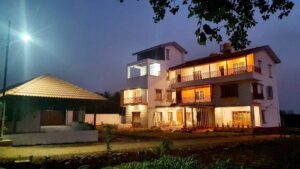
Venue: Ritambhara Retreat, No. 69, BMTC Layout, Adjacent to Kammasandra Village, Lakshmipura Hobli.

The Retreat, located just on the outskirts of Bangalore city, is a small beautiful space dedicated to Yoga & spiritual studies and practices in a simple and clean environment adjacent to a farm of its own.

Accommodation: Only shared accommodation will be provided

Food: Simple sattvik food with fresh grown vegetables from the farm

Reaching the Retreat Venue: The venue is about 22 kms from Majestic Bus Stand and is accessible through Magadi Road and Tumkur Road preferably through own vehicles. The retreat center is very close to ‘Kamadhenu Kshetra’ – a highly popular Raghavendra Swamy temple in the last few years. It would take about an hour to reach the retreat venue from the heart of the city. Participants have to make their own arrangements. If any assistance is required Indica Moksha Team will help.

Please Note:

-Precaution and care are being taken keeping in mind the pandemic situation and health advisories. The venue is cleaned and sanitized. Sanitizers and other necessary aids and practices are put in place.
-The participants are mandated to fill and submit the registration form.
-All Participants have to reach the venue by Friday noon as the sessions commence from that evening itself.
-No children below the age of 18 are allowed in the retreat.
-Accommodation would be provided on a sharing basis. No individual rooms.
-No outside food is allowed or available.
-After registration payment link will be shared separately.

Retreat Fee: Rs.8000/-

*Avail Early Bird discount offer: Rs.7,000/- for registration before 04th April, 2024. (Limited seats only)

For more details contact us at +91 7760079475 or email: nithin@advaita-academy.org

Symposium On Bellaṃkoṇḍa Rāmarāyakavi’s Unparalleled Contributions To Advaita Siddhānta

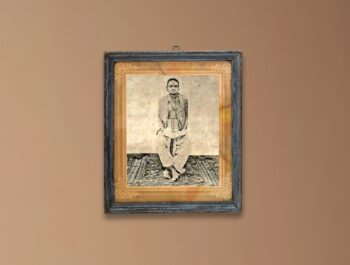
Sri Bellamkonda Ramaraya Kavi was a renowned Sanskrit poet, scholar, yogi, and a staunch philosopher who propagated Advaita Siddhanta. Born in 1875 at Pamidi Padu, Narasaraopet Guntur, Andhra Pradesh, he lived only for 39 years before passing away in 1914. During the short time he lived, he composed as many of 149 Classic Works in Sanskrit of which unfortunately only 45 have survived.

Ramaraya Kavi was a strong proponent of Advaita Siddhanta as enunciated by Adi Shankaracharya. His philosophical interpretations and dialectics of logical disputation of Advaita system of thought earned him the name Apara Adi Shankara meaning an incarnation of Adi Shankaracharya. He was also a Yogi from a young age and is supposed to have been initated into Yoga by Bhagavan Hayagreeva himself.

He wrote a number on works on Vedanta which include both those that explain and elaborate upon the core concepts of Advaita Siddhanta and those that refute other philosophies, most notably the refutation of works of Vishishtadvaita authors such as Sri Ramanujacharya and Sri Vedanta Desika. His most notable works include: Sankaraasankara Bhasya Vimarsaha, Vedanta Sangraha, Bhashyarka Prakasha, Advaitanyamatakhandanam, Advaitavijayah, Advaitamrtam, among others.

Though mainly a philosopher, Ramaraya Kavi was also a wonderful poet. He was a born-poet and being highly proficient both in kavyas and sastras, he could be called, in the words of Rajasekhara, an ubhayakavi. In praise of the Lord Hayagreeva, Ramaraya Kavi has written stuties such as Srimad Hayavadana Satakam, Hayagreeva Ashtottara Satanamavali, Sri Hayagreeva Sahasranamavali, Hayagreeva Navaratnastuti which are said to be rare and very difficult compositions in Sanskrit.

This Symposium seeks to highlight Ramaraya Kavi’s contributions to Advaita Siddhanta.

SCHEDULE

Time Speaker Title of Talk
9.30-9.40 AM Nithin Sridhar
Director & Chief Curator, INDICA Moksha
Introduction
9.40-10.00 AM Dr. Nagaraj Paturi
Dean IKS, INDICA
Opening Remarks
10.00-10.30 AM Vidwan Dr. K. S. Maheswaran
Assistant Professor in Vedanta Department, Madras Sanskrit College, Mylapore
An overview of Rāmarāyakavi’s Advaitāmṛtam (Saṃskṛta Talk)
10.30-11.00 AM Vidwan Dr. Jammalamadaka Srinivas
Scholar – IKS Courses, Siddhanta Knowledge Foundation.
Advaitavijayaḥ : A unique vādagrantha by Rāmarāyakavi
11.00-11.30 AM Vidwan Shankararama Sharma
Traditional Vidwan and Techno-Linguistic Scholar at Vyoma Linguistic Labs
Vedāntasaṅgrahaḥ : An exploration into journey to Self-Knowledge
11.30 AM-12.00 NOON Vidwan Dr. Karthik Sharma
Assistant Professor, Chinmaya Vishwa Vidyapeeth, Kochi
Bhāṣyārkaprakāśa’s arguments regarding the beginning of Gītāśastra (Saṃskṛta Talk)
12.00-12.30 PM Vaidyanathan R S
Vedanta Seeker. Pursuing PhD in Economics from JNU, New Delhi.
A discussion on Śāstropadeśa-upapatti as per Bhāṣyārkaprakāśa
12.30-1.00 PM Vidwan Manikandan Iyer
Traditional Vidwan and Banker
Insights from Īśāvāsyopaniṣad Kārikā of Vedāntamuktāvalī (Kannada Talk)
2.00-2.30 PM Vidwan Dr. Vasudevan P R
Assistant Professor in Nyaya Department, Madras Sanskrit College , Mylapore
An exploration of Rāmarāyakavi’s Śārīraka Catuḥsūtrī Vicāra (Saṃskṛta Talk)
2.30-3.00 PM Vidwan Kuvalaya Datta
Traditional Scholar & Teacher of Advaita Vedanta, Datta Peetham, Mysuru.
First Sūtra of Badarayana’s Brahmasūtras as enunciated in Śārīraka Catuḥsūtrī Vicāra (Saṃskṛta Talk)
3.00-3.30 PM Vidwan Dr. Kuppa Bilwesa Sarma
Assistant Professor,Department of Prachina Vyakarana, Sampurnanand Sanskrit University, Varanasi
Insights from Rāmarāyakavi’s Śaṃkarāśaṃkara-Bhāṣya-Vimarśa (Saṃskṛta Talk)
3.30-4.00 PM Acharya Jaishankar Narayanan
Acharya of Advaita Vedanta. Runs Aarsha Vidya Varshini Gurukulam at Dakshinamurthy Sarovar, Therku Pappankulam, Tirunelveli District, Tamil Nadu
Nirviśeṣa Atma Nirūpaṇam in Śaṃkarāśaṃkara-Bhāṣya-Vimarśa
4.00-4.20 PM Dr. Nagaraj Paturi
Dean IKS, INDICA
Summary and Closing Remarks
4.20-4.30 PM Nithin Sridhar
Director & Chief Curator, INDICA Moksha
Conclusion and Vote of Thanks


Journey To Self Realization : An Introduction To Aparokshanubhuti

2-day Residential Retreat

Journey to Self Realization

An introduction to Aparokshanubhuti
by
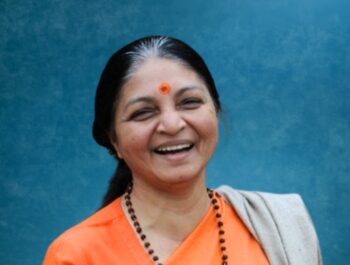
Swami Chidrupananda

One of the deeper texts of Prakarana Grantha in Vedanta shastra is ‘Aparokshanubhuti’ written by Bhagawan Shri Adi Shankaracharya. A prakriya Grantha is a book of definitions to explain the deep truths given in the Shastras. This text may look simple but very deep and it leads to deeper meditations once we try to internalise the contents of the text.

We use three words in Vedanta. Pratyaksha, Paroksha and Aparoksha. Whatever we can see through senses is Pratyaksha. Paroksha is indirect or gaining the knowledge ‘through the eyes of someone else’, and Aparoksha is immediate and transcendental experience after which there will be left no doubts whatsoever regarding the true nature of self. This is an experience that puts an end to all our misconceptions born of ignorance.

This is a text which emphasises more on practice and not on a theoretical explanation. This gives many pointers to Meditation for a sincere seeker.

The retreat will focus on providing a comprehensive overview of the teachings of the text

The Details of the Retreat are as follows:

Date & timings: Starts on the evening of Friday, March 15, 2024, 5pm and concludes on Sunday, March 17, 2024, 3pm.

Venue: Ritambhara Retreat, No. 69, BMTC Layout, Adjacent to Kammasandra Village, Lakshmipura Hobli.

The Retreat, located just on the outskirts of Bangalore city, is a small beautiful space dedicated to Yoga & spiritual studies and practices in a simple and clean environment adjacent to a farm of its own.

Accommodation: Only shared accommodation will be provided

Food: Simple sattvik food with fresh grown vegetables from the farm

Reaching the Retreat Venue: The venue is about 22 kms from Majestic Bus Stand and is accessible through Magadi Road and Tumkur Road preferably through own vehicles. The retreat center is very close to ‘Kamadhenu Kshetra’ – a highly popular Raghavendra Swamy temple in the last few years. It would take about an hour to reach the retreat venue from the heart of the city. Participants have to make their own arrangements. If any assistance is required Indica Moksha Team will help.

Please Note:

-Precaution and care are being taken keeping in mind the pandemic situation and health advisories. The venue is cleaned and sanitized. Sanitizers and other necessary aids and practices are put in place.
-The participants are mandated to fill and submit the registration form.
-All Participants have to reach the venue by Friday noon as the sessions commence from that evening itself.
-No children below the age of 18 are allowed in the retreat.
-Accommodation would be provided on a sharing basis. No individual rooms.
-No outside food is allowed or available.
-After registration payment link will be shared separately.

Retreat Fee: Rs.8000/-

*Avail Early Bird discount offer: Rs.7,000/- for registration before 29th February, 2024. (Limited seats only)

For more details contact us at +91 7760079475 or email: nithin@advaita-academy.org

The Secret Wisdom Of Dakshinamurthy Stotram

Attributed to the sage Adi Shankaracharya, Dakshinamurthi Stotram is revered text that is celebrated for its complex and profound verses that delve into the core principles of non-duality. In this talk, Dr. Rajeev Kurapati offers an in-depth analysis, taking the audience beyond the surface to uncover the rich layers of meaning hidden in the original Sanskrit. Listeners will be guided through the intricate symbolism, metaphors, and philosophical nuances that form the essence of each verse, opening a pathway to a deeper comprehension of the timeless wisdom encapsulated in this sacred scripture.

विज्ञान भैरव तन्त्र : Exploring The Divinity Within (Hindi Talk)

Vigyana Bhairava Tantra is a Shaiva Tantra of the Kaula Trika tradition of Kashmir Shaivism. It is framed as a discourse between Bhairava and Bhairavi in 163 Sanskrit stanzas where Bhairava reveals the essence of how to realize the true nature of reality. Towards this end, Bhairava instructs briefly 112 Tantric meditation methods in very compressed form.

In this 2-part talk, Dr. Omkar Aradhi will give an introduction and an overview of the teachings of the text.

Morning Session : 10:00AM to 12:00Noon

Evening Session : 03:00PM to 05:00PM

Three Vedantic Perspectives On ISHAVASYA UPANISHAD

The Upanishads are primarily concerned with spiritual knowledge and liberation, and they explore questions about the nature of reality, the self, and the universe. They are known for their profound insights and poetic language, and they have influenced countless thinkers and spiritual seekers over the centuries.

The Upanishads have had a profound impact on Indian culture and thought. They have influenced Hinduism, Buddhism, Jainism, and Sikhism, and they continue to be studied and practiced by millions of people around the world.

The Isavasya Upanishad is one of the most important and influential Upanishads. It is a short text, consisting of only 18 verses, but it is packed with profound wisdom about the nature of reality, the Self, and the ultimate goal of human life.

In this talk, the speaker will address these topics:

  1. A quick overview of Advaita, Visistadvaita and Dvaita bhashyas on the Isavasya Upanishad
  2. Highlights of the differences between these three schools regarding the interpretation of this Upanishad.
  3. Can these three views be reconciled? If so, how?

Understanding Gita & Bhagavata In The Context Of Rasopasana

Rasopasana is a spiritual practice practiced by the Rasik traditions of Brindavan. The use of Rasa in the spiritual practice is started by Gaudiya Vaishnava tradition started in 16th century following the teachings of Chaitanya Mahaprabhu which was later taken up by followers of Harivams Mahaprabhu (Radha Vallabha sampradaya) and Swami Haridas (Haridasi sect of Nimbarka Sampradaya). These sampradayas consider Prema (divine love for Sri Krishna) as the parama purushartha and reject Dharma, Artha, Kama and even Moksha as the purusharthas. The followers of Chaitanya Mahaprabhu considered Bhagavata Purana as the pramana for his teachings and Bhagavadgita as a sopana (ladder) for Bhagavata while proposing Prema purushartha. In fact, they even go beyond Bhagavata itself in their final analysis of the bhav they try to cultivate in their spiritual practice. As is well known, the other vaidik traditions such as Advaitha, vishishtadvaita and dvaita interpret Bhagavadgita and Bhagavata as propounding Moksha Purushartha, though they differ in the idea of Moskha. The lecture tries to understand both the works from the perspective of Rasopasana : what they mean to them.

Morning Session : 24 Dec 2023 | 11:00am to 12:30pm

Evening Session : 24 Dec 2023 | 04:00pm to 05:30pm

THE SEARCH FOR HAPPINESS : A Vedānta Perspective

The Upanishads recognize happiness as the one thing that living beings seek in all of their endeavors. They do not look down at the happiness, which we human beings derive from sense objects, power, position etc. They however point out that lasting happiness is from Self-realization only. Everything else is finite and therefore the happiness from any source other than the Self also is bound in time. It is fleeting and is illusory. The happiness of the Self is our true nature. The Vedānta helps us to remove the ignorance that obstructs our seeing the Self. The Vedanta helps us stay in the Self, as the Self.

The two talks will not only give an outline of the philosophy behind this astounding revelation that we are by nature happiness, but also supply practical tips on the necessary practices that help us unveil the radiant Self.

/ raso vai sah /

The truth of your existence is pure bliss.

Taittiriya Upanishad, Valli 2

Dec 09 & 10 | 10:00AM to 11:30 AM

Chidanandarupah Shivoham: Understanding Nirvana Shatkam

The Nirvana Shatkam is a beautiful composition of six verses on ‘Nirvana’ or Moksha composed by Jagadguru Sri Adi Shankaracharya at the age of 8 or 9 when asked by Sri Govindapaadacharya, ‘Who are you?’

It begins with the often quoted and often sung ‘mano buddhi ahankaara chittani…’ The teachings point to the un-negatable reality that one truly is and what one is not. This must be pointed out due to the universal confusion of mistaking oneself to be merely the body-mind. A limited idea of oneself creates a sense of inadequacy and much sorrow. The teachings of Nirvana Shatkam are not a denial of everyday reality nor do they advocate an escape from one’s responsibilities but point out that you were always free – chidananda. We will look into these profound verses while addressing common myths about Vedanta and also meditate on the meaning as oneself.

Morning Session : 10:00AM-12:00PM | 25 Nov 2023

Evening Session : 03:00PM-05:00PM | 25 Nov 2023

Symposium On “Contributions Of Śrī Vācaspati Miśra To Āstika Darśanas”

Vachaspati Mishra was a prominent Indian Darshanika who is considered to be one of the greatest literary geniuses that India has ever produced. He was a scholar-par-excellence endowed with encyclopedic learning and exposition skill which he employed to compose authoritative expositions on all Astika Darśanas. His name has been deservedly associated with the honorific title “sarvatantrasvatantraḥ” which is a rare honour conferred only upon literary prodigies.

However, very little is known about biographical details of Vachaspati Mishra. He was born into a Maithil Brahmin family of Mimamsakas in Andhra Tharhi, Madhubani, Bihar and probably lived during the 9th century CE. There is some evidence in Bhāmatī that suggest Vācaspati Miśra as being under the patronage of Nṛga, who was a king of generous nature highly famed for his wonderful deeds.

Vachaspati Mishra has contributed several significant works to different Darshanas.

He made two important contributions to Nyaya-Vaisheshika Darshanas, namely:
(1) Nyāyavārtikatātparyaṭīkā- a lucid commentary on the Nyāyavārtika of Udyotakara which refuted the Buddhist objections to Nyaya Darshana.
(2) Nyāyasūcīnibandha- an attempt at restoring the text of the Nyāyasūtras of Gautama in their proper form and sequence, which had been subjected to severe ill-treatment and distortions by the Buddhists.

His contributions to Mimamsa Darshana includes:
(1) Tattvabindu- is an independent treatise on vākyārtha
(2) Nyāyakaṇikā- is a scholarly commentary on the Vidhiviveka of Maṇḍana Miśra which is an exposition on the nature of vidhi.

On Samkhya & Yoga Darshanas, his works include:
(1) Sāṅkhyatattvakaumudī- is a renowned commentary on on Īśvarakṛiṣṇa’s Sāṅkhyakārikā.
(2) Yogatattvavaiśāradī- is a commentary on Vyasa’s commentary on Pātañjalayogasūtras .

Vachaspati Mishra was a Vedantin and as such he has written a number of works on Advaita including his magnum opus titled ‘Bhāmatī’. His significant Vedanta works include:
(1) Bhāmatī- is the most ancient, complete and elaborate available commentary on Śrī Śaṅkara’s Brahmasūtrabhāṣya. With this work, Vachaspati Mishra started the Bhāmatī School of Advaita.
(2) Tattvasamīkṣā- is a commentary on Maṇḍana’s Braḥmasiddhi.

This Symposium seeks to explore the encyclopedic scholarship of Vachaspati Mishra and highlight his contributions to Astika Darshanas.

Works Consulted:
Sasikumar. B. 2017. Contribution of Vachaspati-Mishra to Samkhya System. Wisdom Library.

SCHEDULE

Time Speaker Title of Talk
10.00-10.10 AM Nithin Sridhar
Director & Chief Curator, Indica Moksha
Opening Remarks
10.10-11.00 AM Swamini Svatmavidyananda Saraswati
Acharya of Arsha Vijnana Gurukulam based in Eugene, OR
Inaugural Address: Vācaspati Miśra And Advaita Vedānta
11.00-11.30 AM Prof. Bishnupada Mahapatra
Professor & HOD, Department of Nyaya-Vaisheshika, Shri Lal Bahadur Shastri Rastriya Sanskrit Vidyapeetha, New Delhi
न्यायशास्त्रे आचार्यवाचस्पतिमिश्रस्यावदानम्- Vācaspati Miśra’s Contributions To Nyāya Darśana
11.30 AM-12.00 NOON Dr. Sandeep Kumar Sharma
Traditional Scholar of Nyaya and Vedanta
वाचस्पतिमिश्राणाम् ख्यातिविमर्श:- Vācaspati Miśra’s Insights On Khyātivāda
12.00-12.30 PM Dr. Jammalamadaka Srinivas
Scholar – IKS Courses, Siddhanta Knowledge Foundation
Vācaspati Miśra’s Contributions To Sāṃkhya Darśana
12.30 PM-1.00 PM Vid. Karthik Sharma
Assistant Professor in Chinmaya Vishwa Vidyapeeth, Kochi
सत्कार्यवादव्यवस्थापनम्- Arguments From Sāṃkhyatattvakaumudī To Establish Satkāryavāda
2.00-2.30 PM Dr. Satyanarayanacharya
Senior Linguist Scholar in the Department of Linguistics, Vyoma Linguistic Labs Foundation
अद्वैतवेदान्ते वाचस्पतिमिश्राणां वैशिष्ट्यम्- Preeminence Of Vācaspati Miśra In Advaita Vedānta
2.30-3.00 PM Dr. Pushkar Deopujari
Assistant Professor in Vedanta, Calicut Adarsha Sanskrit Vidyapeetha, Kozhikode, Kerala.
भामतीनिबन्धस्य महिमा, गरिमा, गभीरिमा च – Decoding Vācaspati Miśra’s Masterpiece
3.00-3.30 PM Dr. Ganesh Ishwar Bhat
HOD and Professor in Advaita Vedanta Department, Rashtriya Sanskrit Sansthan in Rajiv Gandhi Campus, Sringeri.
जिज्ञासासूत्रभाष्यार्थवर्णने वाचस्पतिमिश्राणां स्वतन्त्रः पन्थाः- Vācaspati Miśra’s Unique Perspective On Jijñāsāsūtra Bhāṣya
3.30-4.00 PM Vid. Kuvalaya Datta
Traditional Scholar of Samaveda & Advaita Vedanta. Teacher of Advaita Vedanta, Datta Peetham, Mysuru.
भामतीग्रन्थानुसारेण भेदाभेदविचारः- Vācaspati Miśra’s Insights On ‘Bhedābheda’ In Bhāmatī
4.00-4.30 PM Vidwan V Krishna Sharma
Traditional Scholar of Samaveda & Advaita Vedanta. Teacher of Samaveda, Datta Peetham, Mysuru.
श्रीवाचस्पतिमिश्रमतानुसारेण शास्त्रयोनित्वाधिकरणम्- Sri Vācaspati Miśra’s Insights On Śāstrayonitva Adhikaraṇam Of Brahmasūtra
5.00-5.30 PM Dr. Tulasi Kumar Joshi
Assistant Professor, Department of Sanskrit, Vasanta College for Women, Rajghat, Varanasi.
Definition Of Yoga: Perspectives From Tattvavaiśāradī
5.30-6.00 PM Pt. Rajeshwar Vishwasshastri Deshmukh Ghodajkar
Traditional Scholar of Nyaya, Purana, and Vedanga. Teaches Nyaya Shastra at Vedanta Vidyapeetha, Sri Dattadevasthan, Ahmednagar.
न्यायकणिकायां विधिविचारः – Vācaspati Miśra’s Reflections On Vidhi In Nyāyakaṇikā
6.00-6.30 PM Dr. Janakisharan Acharya
Dean – Faculty of Darshan in Shree Somnath Sanskrit University
भामतीदृष्ट्या कर्मणाम् उपयोगः- Bhāmatī’s Enunciation On Karma
6.30-7.00 PM Dr M Jayaraman
Professor & Dean, Division of Yoga and Spirituality,
SVYASA Deemed University
Insights On Aṣṭāṅga Yoga From Tattvavaiśāradī Of Vācaspati Miśra
7.00-7.20 PM Dr. Nagaraj Paturi
Dean IKS, INDICA
Summary And Closing Remarks
7.20-7.30 PM Nithin Sridhar
Director & Chief Curator, Indica Moksha
Conclusion And Vote Of Thanks