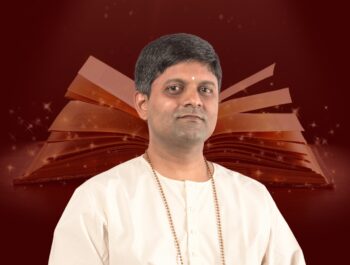
Atma Vidya Vilasa of Sadashiva Brahmendra

Southern India recognizes and adores Sadashiva Brahmendra as the celebrated composer of divine kirthanas; but not many may be aware he, in his later years, was an Avadhutha, a jeevan muktha who lonely wandered the hills and dales; ran along the river banks, naked or semi-naked, in a state of divine bliss.

He, unmindful of the scorching sun, pouring rain, and blowing chill winds roamed in the wilderness without ever uttering a word; slept under the starry sky; shunned all human contact; and, was ever in a supreme intoxicated state.

Today he is revered not merely for his musical compositions; but also for his sublime Advaita text “Atma Vidya Vilasa”, the most favorite spiritual text of Sri Chandrasekhara Bharathi Swami the 34th Jagadguru of Sringeri Peetha.

The swami, himself an Avadhuta, a week before his passing away, parted with all his meager passions; but retained, on second thought, a copy of Atma Vidya Vilasa till the day prior to his departure.

Join this series of talks by Swamini Svatmavidyananda on Atma Vidya Vilasa of Sadashiva Brahmendra

Link to The Text

Morning Sessions:

10:00AM to 12:00 PM27 January 2023 | 28 January | 29 January 

Evening Sessions:

06:00PM to 08:00 PM27 January 2023 | 28 January | 29 January 

Shatka Sampatti: The Six Kinds of Spiritual Wealth

Shatka Sampatti: The Six Kinds of Spiritual Wealth

Series of talks on the topic by Swami Chidrupananda

The sAdhana chatuShTaya is described by Shankara in the vivekachUDAmaNi as follows:

Adau nityAnityavastuvivekaH parigaNyate |
ihAmutraphalabhOgavirAgasttadanantaram ||
shamAdiShaTkasampattiH mumukShutvamiti sphuTam || – Verse 19.

The first discipline is the discrimination between the Real and the unreal. The next discipline is detachment or dispassion from the enjoyment of the world here and after death (heaven). The third discipline is the practice of the six behavior traits – shama, dama, uparati, samAdhAna, shraddhA, and titikShA; the fourth discipline is the intense desire for escape from this saMsAra or realization of the divinity in her or him.

In this 2-part weekend with wisdom series we focus on shamAdi ShaTka sampatti which includes – shama, dama, uparati, samAdhAna, shraddhA, and titikShA.

The sessions will be taken up by Swami Chidrupananda of Chinmaya Mission

21 & 22 Janunary 2023 | 11:00AM to 01:00PM

Jnana Meets Bhakti

Jnana Meets Bhakti

Perspectives From Brahma Sutras & Narada Bhakti Sutras

Jnana Yoga is like crossing a river by swimming. Bhakti Yoga is like crossing a river by boat. The Jnani asserts and expands. The Bhakta dedicates and consecrates himself to the Lord and contracts himself.

Jnana Meets Bhakti, a series of Two Talks juxtaposing Jnana Yoga and Bhakti Yoga through the perspectives from Brahma Sutras & Bhakti Sutras

19 & 20 Janunary 2023 | 06:00PM to 08:00PM

Session Details:
Session 1
Jnana – Based on Adi Shankaracharyas Adhyasa Bhashya in Brahma Sutra
What is knowledge of the Self and why is there a need for it? Can one live without it? What are the challenges in acquiring and abiding in the knowledge of Truth?

Session 2
Bhakti – based on Narada Bhakti Sutras
What is devotion and why is there a need for it? Can one live without it? How does it help one in the path of knowledge? What happens when Jnana meets Bhakti?

Join this series of two talks by Brahmacharini Shubhani Chaitanya

SPIRITUAL RETREAT | SHAKTODAYA

2-day RESIDENTIAL
SPIRITUAL RETREAT

SHAKTODAYA

Dawn of Supreme Goddess

This retreat will focus on

Dhyana , collective stotra chanting and discussions about Her tattva and some shakta philosophy

Description of Shakti – The Divine Mother

Shakta , the one who worships Shakti as Divine Mother , opens the inner doors of realising Her immanence in all of Prakriti. Prakrit involves Sadhaka’s own nature , svabhava.  To come in contact with Her presence in our own nature and thus make Her grace the firmament on which edifice of life is built is the central aspiration of the seeker of this path. We learn to adore all life as auspicious reflection of Her tattva, principle. In trials and tribulations of life , joys and exalted moments, we seek Her Divine touch. We learn to see her Mulaprakriti from whom trigunas emanate.

The Details of the Retreat are as follows:

Date & timings: Starts on the evening of Friday, February 10, 2023, 5pm and concludes on Sunday, February 12, 2023, 3pm.

Venue: Ritambhara Retreat, No. 69, BMTC Layout, Adjacent to Kammasandra Village, Lakshmipura Hobli.
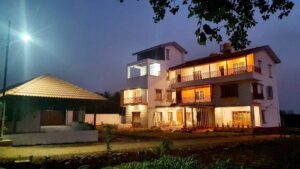
The Retreat, located just on the outskirts of Bangalore city, is a small beautiful space dedicated to Yoga & spiritual studies and practices in a simple and clean environment adjacent to a farm of its own.

Accommodation: Only shared accommodation will be provided

Food: Simple sattvik food with fresh grown vegetables from the farm

Reaching the Retreat Venue: The venue is about 22 kms from Majestic Bus Stand and is accessible through Magadi Road and Tumkur Road preferably through own vehicles. The retreat center is very close to ‘Kamadhenu Kshetra’ – a highly popular Raghavendra Swamy temple in the last few years. It would take about an hour to reach the retreat venue from the heart of the city. Participants have to make their own arrangements. If any assistance is required Indica Moksha Team will help.

Please Note:

-Precaution and care are being taken keeping in mind the pandemic situation and health advisories. The venue is cleaned and sanitized. Sanitizers and other necessary aids and practices are put in place.
-The participants are mandated to fill and submit the registration form.
-All Participants have to reach the venue by Friday noon as the sessions commence from that evening itself.
-No children below the age of 18 are allowed in the retreat.
-Accommodation would be provided on a sharing basis. No individual rooms.
-No outside food is allowed or available.
-After registration payment link will be shared separately.

Retreat Fee: Rs.6000/-

*Avail Early Bird discount offer: Rs.5,000/- for registration before 31st Jan, 2023. (Limited seats only)

For more details contact us at +91 7760079475 or email: nithin@advaita-academy.org
An Introduction to Shankaracharya’s Prabodha Sudhakara

Prabodha Sudharaka is not commonly known treatise on Advaita Vedanta composed by Sri Adi Shankaracharya. Prabodha means awakening. Sudhakara means the ocean of nectar. Our real nature is existence-conscious-bliss absolute. But we have forgotten our true nature and suffering in darkness. The moment we realize our true nature we experience bliss. This idea is well developed in the text.
Prabodha Sudhakara consists of 19 chapters comprising 257 verses. Arrangement of chapters is very interesting. It begins with gross body, moves on to sensory organs, then the mind, dispassion, revelation of the Self, maya, subtle and causal bodies, experiencing non-dualism, enlightenment, devotion, meditation, becoming one with Saguṇa Brahman and Nirguṇa Brahman and finally the Divine Grace for absorption unto Him.

ISA STUTI OF SWAMI TEJOMAYANANDA

God is the most talked about entity in the world.

Who is God? Is He the imagination of the fertile human mind? Does He exist or not? Is He existence or a void? Can He be known or is He always unknowable?

Such and more questions are answered as praise of – Isa Stuti (Hymn to Him).

This wonderful composition of Pujya Guruji Swami Tejomayananda leaves us with a sweet feeling of devotion to God and makes us wonder why we ever questioned His existence.

This series of talks will be given by Brahmachari. Ved Chaitanya Ji from Chinmaya Mission.

Link to purchase the book with commentary:
https://eshop.chinmayamission.com/product/hymn-to-him-isa-stuti-

Morning Sessions: 10:00AM to 12:00PM |24th & 25th Dec 2022

Evening Sessions: 04:00PM to 06:00PM |24th & 25th Dec 2022

Life & Works of Advaita Acharyas – Swami Sivananda Saraswati

On Thursday, the 8th. of September 1887, in the early hours of the morning, when the star Bharani was in the ascendant was born a boy-child in the village of Pattamadai on the bank of the river Tamraparani in South India. His name was Kuppuswamy.

He served humanity as a doctor for a considerable time in his life while being rooted in his prayer and worship every day. In spite of his busy life, Dr. Kuppuswamy served the Sadhus, Sannyasins, and beggars. Through the influence of a Sadhu he went deeper into his spiritual quest.

Dr. Kuppuswamy reached Rishikesh on the 8th of May, 1924. On the 1st of June, 1924, there came His Holiness Sri Swami Visvananda Saraswati. The doctor saw a Guru in the monk and the monk saw a Chela (disciple) in the doctor. After a brief exchange of words, Dr. Kuppuswamy was initiated into the Sannyas order by Swami Visvananda. Swami Vishnudevanandaji Maharaj, the Mahant of Sri Kailas Ashram, performed the Viraja Homa ceremonies. The Guru named the doctor Swami Sivananda Saraswati. Swami Visvananda wrote the necessary instructions about Sannyas Dharma from Benares. Swami Sivanandaji stayed at Swargashram for Sadhana.

Swamiji practiced all the various Yogas and studied the scriptures. After years of intense and unbroken Sadhana, he enjoyed the bliss of Nirvikalpa Samadhi.

Join this series of talks by Swami Brahmanishtananda to know more about the life and works of Swami Sivananda Saraswati

Morning Session: 11:30AM to 01:30PM | 17 Dec & 18 Dec 2022

Evening Session: 04:30PM to 06:30 PM | 17 Dec & 18 Dec 2022

Glimpses for Vivekachoodamani

Vivekachoodamani –

One of the longest Prakarana Grantha-s authored by Bhagavan Adishankaracharya

Sessions will cover key concepts with explanations, illustrations and examples under each of the titles, with reference to the relevant shlokas.

Session 1: Panchakosha Viveka | 10 DEC 2022 10:00AM to 12:00PM

Session 2: Tat Tvam Asi – Mahavakya Vichara | 10 DEC 2022 05:30PM to 07:30PM

Session 3: Prarabdha of a Saint | 11 DEC 2022 10:00AM to 12:00PM

Session 4: Experience of Self-hood & Qualities of a Saint | 11 DEC 2022 05:30PM to 07:30PM

Understanding Vedanta Through the Kathopanishad by Dr. Jayakumar Srinivasan

The Kathopanishad from the Yajurveda is unique in many respects. It begins with an inspiring story, presents a pre-teenage boy Naciketas as extremely mature to the point of even advising his father, he gets as his teacher Lord of Death – Yama – Himself, he rejects all the temptations offered by Yama, and is crystal clear about what he wants Yama to teach – “Teach me that which is beyond Dharma and Adharma”.

This leads to the teaching of Brahmavidyaa, through some famous mantras like “Shreyascha Preyascha”, Ratha Kalpana, and “UttiShTata jAgrata”. In the process, even the qualifications of the shishya, such as discernment (viveka) and dispassion (vairAgyam) are beautifully covered.

Morning Session: 10:00 AM to 11:00 AM |03.12.2022 & 04.12.2022

Evening Session: 04:00 PM to 06:00 PM |03.12.2022 & 04.12.2022


Fragrance of Vedanta in English Literature

Upanishads describe a Seer as ‘Kavi’. Poetry is an inspired and spontaneous expression of a soul absorbed in a higher state of consciousness. Thus, Santana Dharma, or Eternal Principles of life are revealed through great poets in all languages.

Classical English poems and literary pieces contain valuable lessons for human life. Many of the great English poets have been influenced by wisdom of Vedanta either directly or indirectly. One of the greatest contributions of Swami A. Parthasarathy is interpretation of such poems from the point of view of the values contained in Vedanta.

This series of 4 talks intends to cover the following topics:

  1. Perfected Human Being based on the poem ‘The Village Preacher’ by Oliver Goldsmith
  2. Practical Aids based on the portion of ‘Polonius’ Advice in the play Hamlet by William Shakespeare
  3. Objectivity – Sakshi based on the poem ‘Even This Shall Pass Away’ by Theodore Tilton
  4. Spiritual Path based on the poem ‘Daffodils’ by William Wordsworth

Time & Date:

Morning Sessions: 09:00AM to 10:30AM on 26.11.2022 & 27.11.2022

Evening Sessions: 06:00PM to 07:30PM on 26.11.2022 & 27.11.2022