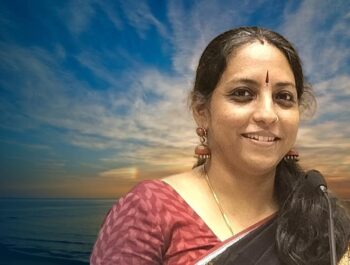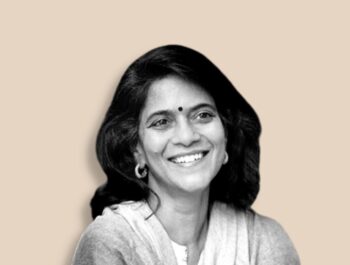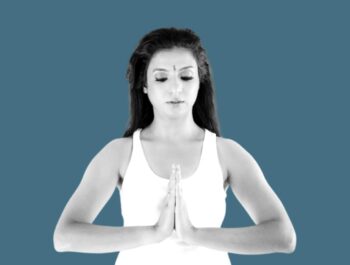
This session will be about the deeply relaxing and effective practice of Yoga Nidra. Samanta will talk about its benefits and a brief history followed by the practice of yoga nidra. This particular session will be effective for letting go of stress , tiredness and anxiety.
Events Platfrom: Yoga
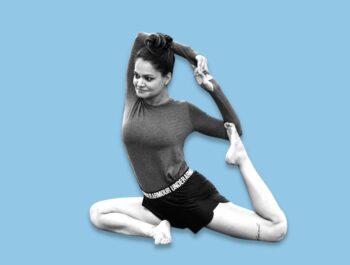
Using a subset of the asanas in her book titled ‘Beyond Asanas,’ Pragya will be talking about the mythological context of asanas and how this mythology informs the spiritual lessons embodied by them. She will use several images of the asanas to depict the myths. She will also be speaking about the asanas from a modern practice perspective, to demonstrate that asanas themselves are constantly evolving. She will speak extensively from her experience as a practitioner, scholar and a teacher with over a decade of asana teaching experience. This presentation will be from the point of view of a practitioner-scholar i.e. someone who has first traversed the practical path of seeking yogic wisdom (through a search for teachers and masters) and then supplemented that quest with academic knowledge. Her perspective on yoga is of someone who has spent considerable time studying with living teachers and masters and this experience informs her academic pursuit of yogvidya.
The most holy of all Veda mantras revealed to Ṛṣi Viśvāmitra holds a very special place in the Hindu tradition and is adored and revered by all seekers. In this session, Shantala will take you through the intricacies of the Vedic phonetics applied to the Gāyatrī mantra to understand and chant this mantra for a profound experience.
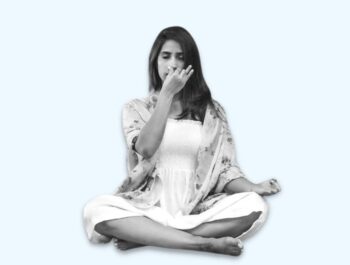
In this session, Amrutha will explain the importance of Pranayama and why it is interconnected to our asana practice. She will start the session with natural breath awareness meditation, followed with a few other yogic pranayama techniques. Pranayama strengthens the connection between our body and mind, and promotes relaxation and mindfulness. It is an essential part of yoga and this session will help you understand why.
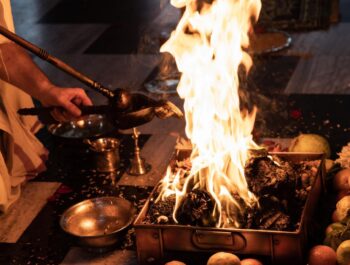
Indica is pleased to invite you to a 4-day Vedic Chanting Immersion. Alumni of Veda Vijnana Gurukulam, Bangalore under the leadership of Veda Brahmashri Sri Arvindaksha Bhatta will be chanting (parayanam) the entire section of Krishna Yajurveda Taittitiriya Shakha from 14.04.2022 to 17.04.2022 at Indica Ritmabhara Retreat on the outskirts of Bangalore.
Experience the power of the mantras, living in an ashram!
Its a free and open event for all vedic chanting enthusiasts.
RSVP a must @ +916363663313.
Venue
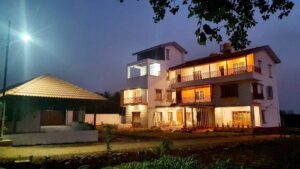
Ritambhara Retreat
No. 69, BMTC Layout, Kammasandra, Karnataka 562162
Tight hips can be caused due to a variety of reasons and tightness in the hips can cause tightness in the lower back and inhibit our capacity to sit comfortably in seated postures like sukhasana or padmasana. Sakina will be guiding us through gentle hip-opening asanas that will work on a physical, mental and emotional level to alleviate any discomfort and allow our hips to slowly open and become flexible and strong.
As human beings who walk the earth we all suffer. In fact, in the Yoga Sutras it is said that a wise man realizes that; “dukham eva sarvam vivekinaha” everything is suffering. So why do we suffer? What keeps us in the bondage of suffering? One answer to that will be our “Kleshas“, inborn psychological afflictions that are the root of Karma and keeps us looped in the cycle of samsara.
But all is not lost, as Maharishi Patanjali gives us “heyam dukham anagatam” prevent suffering that is yet to occur. But before we can prevent it, we have to first be aware that we are suffering, the reasons we suffer and no, it’s not because of another person or an external situation!
And this is where the kleshas come in. The field of the rising of these afflictive states is one of avidya, considered the root Kesha and generally defined as “ignorance or not knowing”. So is avidya simply “not knowing”? It is here, in the Sutra 2.5 that Maharishi Patanjali gives us one of the most incisive definitions of avidya. He brings clarity to the term by defining the different components of avidya so we understand that it is not as simple as not knowing something, but worse, it is “knowing it mistakenly”. So by delving into this very important sutra we become aware of the components of avidya which enables us to see it clearly reflected in our day to day life. And this capacity to “see” is vital, as it then helps us shift our perspective and assign the correct value to events and relationships around us. All of which helps to reduce dukha suffering.
Maharishi Patanjali also gives us “hanam“, the means to alleviate suffering, through the tool kit of Kriya Yoga; tapas, svadhyaya and ishvara pranidhana. These methods work on tanu attenuating the kleshas to attain states of absorption. So through this talk we open our minds to the different afflictions, gain the knowledge of the virtues of effort, self-study and surrender in cultivating the mind to receive higher states of consciousness.
In Ayurveda, food can be as powerful of a healer as medicine, or it can be as harmful as the deadliest poison. The point is, what we put into our bodies day in and day out has an incredibly significant impact on our health. But how do we know how a certain food is going to affect our bodies? Do we rely on food lists, or is there a more intuitive and logical way to see whether food can heal or harm? In this talk, Valerie will introduce the Rasa Panchakas, an Ayurvedic system of understanding the qualities of food and other everyday substances and how they affect the human body. She will go over the basic building blocks of Ayurveda: the 5 elements, the 3 doshas, and the gunas (qualities of nature), the Rasa Panchakas – Rasa, guna, virya, vipaka, prabhav, and how to use this knowledge to make healthier choices in everyday life.
2-Day Textual Immersion Retreat (Residential) on HAṬHA-YOGA-PRADĪPIKĀ,
With Focus on PRĀṆĀYĀMA
About the Textual Immersion Retreat
Prāṇāyāma is one of the important limbs of Yoga. It has an important role to play both in therapeutic and meditative dimensions of Yoga. Sage Patañjali in Yogasūtra states – “tataḥ kṣīyate prakāśāvaraṇam”-Prāṇāyāma helps overcome the covering over light i.e it reduces Rajas and Tamas and thereby promotes Sattva and attunes the practitioner towards meditative goals.
Haṭha-yoga-pradīpika is a 15th century Yoga text that describes various kinds of Prāṇāyāmas and their benefits in a compact and systematic manner. Jyotsnā is a unique, exhaustive and best known Sanskrit commentary on Haṭhayogapradīpikā by Yogin Brahmānanda. The commentary is a treasure house of very important and practical Yogic inputs.
The Second chapter of Haṭha-yoga-pradīpikā has 78 Sanskrit verses. Prāṇāyāma techniques that are
discussed in the second chapter include (verses 44-70):
1. Sūryabhedanam
2. Ujjāyī
3. Śītkārī
4. Śītalī
5. Bhastrikā
6. Bhrāmarī
7. Mūrchā
8. Plāvinī
Apart from these, the second Chapter also discusses topics like – the importance of practicing Prāṇāyāma, preparations needed for the practice of Prāṇāyāma like the six Kriyā-s, and Nāḍīśodhana and the proper method of practice of Prāṇāyāma (Verses 1-43). The later portion of the chapter after discussing the eight Kumbhaka-s, deals with the classification of Prāṇāyāma and higher states/levels of Prāṇāyāma. The text also presents eight important outcomes of Haṭha Practices (that include Āsana & Prāṇāyāma) – Haṭha-siddhi-lakṣaṇa (71-78).
In this textual immersion, all Sanskrit verses pertaining to the eight types Prāṇāyāma (Verses 44 – 70) from Haṭha-yoga-pradīpikā will be discussed in all detail, with inputs from Jyotsnā commentary. Also practices like Nāḍīśodhana & kapālabhāti (that do not fall under the eight kumbhakas), salient and relevant details on related aspects of Prāṇāyāma from the other verses of the chapter will be duly highlighted and discussed.
Program Details:
Date & timings: Starts on the evening of Friday, 06th May, 4:30 pm and concludes on Sunday,08th May, 2022, 4:30 pm.
Venue: Ritambhara Retreat, No. 69, BMTC Layout, Adjacent to Kammasandra Village, Lakshmipura Hobli.
The Retreat, located just on the outskirts of Bangalore city, is a small beautiful space dedicated to Yoga & spiritual studies and practices in a simple and clean environment adjacent to a farm of its own. (Scan the QR code for directions)
Accommodation: Only shared accommodation will be provided
Food: Simple sattvik food with fresh grown vegetables from the farm
Reaching the Retreat Venue: The venue is about 22 kms from Majestic Bus Stand and is accessible through Magadi Road and Tumkur Road preferably through own vehicles. The retreat center is very close to ‘Kamadhenu Kshetra’ – a highly popular Raghavendra Swamy temple in last few years. It would take about an hour to reach the retreat venue from the heart of the city. Participants have to make their own arrangements. If any assistance is required Indica Yoga Team will help.
Please Note:
- Precaution and care are being taken keeping in mind the pandemic situation and health advisories. The venue is cleaned and sanitized. Sanitizers and other necessary aids and practices are put in place.
- The participants are mandated to fill and submit the registration form.
- All Participants have to reach the venue by Friday noon as the sessions commence from that evening itself.
- No children below the age of 18 are allowed in the retreat.
- Accommodation would be provided on a sharing basis. No individual rooms.
- Please carry your own Yoga mats for hygiene purposes
- No outside food is allowed or available.
- After registration payment link will be shared separately.
To register: https://forms.gle/vzGRwstPm2P6mjRG9
Retreat Fee: Rs.6000/-
*Avail Early Bird discount offer: Rs.5,000/- for registration before 20th April, 2022. (Limited seats only)
For more details contact us at +91 6363663313 or email: namaste@indicayoga.com
Ridhi Bahl is a vāstu śāstra and astrology expert, and she will be talking about how we can align our life and energy according to the principles of vāstu śāstra, and how spatial energy affects our lives. She will be speaking from a scientific perspective on both vāstu śāstra and astrology. She will also talk about the interconnectedness of both astrology and vāstu śāstra and explain the science behind both these practices.